
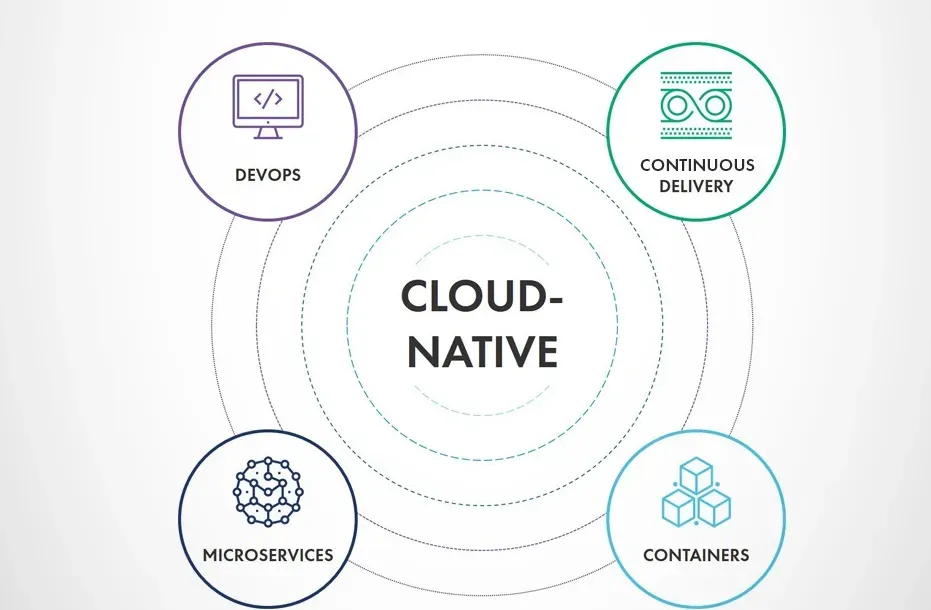
Cloud-native software is a design philosophy that lets modern applications scale, adapt, and recover from failures with ease. By embracing cloud-native architecture, teams can break apps into modular components that evolve independently, enabling targeted updates and safer experimentation across feature boundaries. This approach emphasizes modular components, automation, observability, and resilient patterns that support rapid, reliable deployments even as demand fluctuates. It also encourages a culture of continuous testing, contract-driven development, and well-defined interfaces to keep services coherent as ecosystems expand. Ultimately, this mindset aligns engineering practice with cloud platforms, external data stores, and automated recovery strategies to deliver scalable, fault-tolerant operations.
Viewed through another lens, these ideas map to distributed architectures that rely on lightweight containers and loosely coupled services. Containerization, orchestration, and microservices ecosystems enable elastic scaling and rapid iteration. Automated pipelines support rapid, reliable releases. Together, these patterns deliver horizontal scalability, fault tolerance, and strong observability across the system. In practice, teams favor stateless designs, external data stores, and automated recovery to stay agile while meeting reliability and compliance requirements.
Cloud-Native Software Foundations: Architecture, Microservices, and Containerization
Cloud-native software is built to fully exploit cloud environments by embracing cloud-native architecture patterns such as modularity, decoupled services, stateless design, and automated orchestration. This approach enables rapid changes, elastic scaling, and resilient operation as workloads shift. By designing for the cloud from the outset, teams can achieve faster delivery cycles and higher availability without compromising reliability.
A practical foundation rests on breaking monoliths into microservices, packaging each service with containerization, and managing deployments through automated pipelines. Kubernetes then provides the orchestration layer that handles scheduling, scaling, and self-healing, keeping services aligned with a declared desired state. Together, these elements—cloud-native architecture, microservices, and containerization—create a resilient, scalable platform where individual components evolve independently.
With this trio also comes a focus on observability and resilience: instrumented services emit traces, metrics, and logs that feed centralized dashboards, aiding capacity planning and fault diagnosis. CI/CD pipelines automate builds, tests, and deployments, shortening release cycles while maintaining quality and security across distributed services.
Operational Excellence for Cloud-Native Software: Kubernetes, CI/CD, and Observability
Operational excellence in cloud-native software hinges on selecting the right orchestration and delivery patterns. Kubernetes acts as the backbone for automating deployment, scaling, rolling updates, and fault tolerance across containerized workloads. This orchestration capability enables elastic scaling and reliable recovery, even as traffic patterns fluctuate or failures occur.
A mature operating model leverages CI/CD to push code changes safely from commit to production, incorporating canary releases, blue/green deployments, and feature flags to minimize risk. Observability—through standardized logging, metrics, and distributed tracing—provides the telemetry needed to detect bottlenecks, understand latency, and validate performance under real-world conditions. Security and compliance are integrated into this workflow through secret management, least-privilege access, and automated vulnerability scanning.
As teams scale, API gateways and service meshes help manage inter-service communication, enforce policies, and secure traffic. This design approach—grounded in Kubernetes, CI/CD, and robust observability—supports reliable deployments, faster iteration, and measurable resilience for cloud-native software in multi-cloud or hybrid environments.
Frequently Asked Questions
How does cloud-native architecture leverage microservices and containerization to improve scalability and resilience?
Cloud-native architecture uses microservices to decompose applications into small, independent units that can scale and evolve separately. Containerization packages each microservice with its runtime and dependencies, ensuring consistent behavior across development, test, and production. Together, these patterns enable stateless services with externalized state where appropriate, enabling efficient horizontal scaling and automated recovery, supported by orchestration, observability, and resilience practices.
What roles do Kubernetes and CI/CD play in delivering cloud-native software?
Kubernetes provides the automation layer for deploying, scheduling, scaling, and self-healing containerized workloads, letting you declare the desired state and have the platform converge to it. CI/CD pipelines automate code integration, testing, and deployment, enabling rapid, incremental releases and safer deployments through canary, blue/green, and feature-flag strategies. Together, Kubernetes and CI/CD reduce risk, accelerate delivery, and sustain reliability as demand and workloads evolve.
| Aspect | Key Points |
|---|---|
| What is cloud-native software? | Built to fully exploit cloud environments; emphasizes modularity, containerization, microservices, and dynamic orchestration to achieve rapid deployment, elastic scaling, and fault tolerance. Designed with the cloud in mind from the outset; enables breaking monoliths into independent services. |
| Key characteristics | Microservices, Containerization, Kubernetes and orchestration, CI/CD pipelines, Observability and resilience. |
| Why it matters for scale and reliability | Supports elastic scalability, faster delivery, improved fault tolerance, and stronger reliability through stateless designs, automated recovery, redundancy, and proactive observability. |
| Building blocks | Microservices; Containerization; Kubernetes; CI/CD and automation; Observability and resilience. |
| Designing for scale (patterns) | Stateless services and horizontal scaling; Event-driven and asynchronous processing; Autoscaling and capacity planning; API gateways and service meshes. |
| Deployment strategies | Canary releases; Blue/green deployments; Feature flags; Rollbacks and fast failbacks. |
| Observability, security, and compliance | Observability with logs/metrics/traces, dashboards, correlation IDs; security by design: least privilege, secret management, vulnerability scanning. |
| Cloud considerations and trade-offs | Works across public/private/hybrid clouds; multi-cloud strategies; data locality; cost optimization; vendor dependencies; regulatory requirements. |
Summary
Conclusion: Cloud-native software enables modern organizations to build highly scalable, reliable applications that adapt to changing demand and complex user journeys. By embracing microservices, containerization, Kubernetes, CI/CD, and robust observability, teams can deliver faster, safer releases while maintaining the resilience necessary for production systems. The path to cloud-native success is iterative: start with clear service boundaries, automate the critical delivery pipeline, instrument everything, and continuously test for resilience. With thoughtful design and disciplined operations, cloud-native software becomes a durable advantage, not just a trending methodology.